This is the day
When God botherers say
That their Master arrived
To enslave all he spied
It’s Christmas Day And come what may You’d better be merry And break out the sherry ‘Cause this is the day When God botherers say That their Master arrived To enslave all he spied No escape, those who tried Will be punished soon after they’ve died.
How would you describe your priest, pastor or worship leader? Are they actually fit to lead?
Speaking as an atheist I believe that it is possible to divide clergy into three groups. There are the gullible, the deceitful and those who are both gullible and deceitful.
Paley’s watch is named after Rev. William Paley, the minister who first used the analogy of finding a watch on the beach as an analogy to prove Biblical creation. Of course it does no such thing but religious conviction tends to limit the ability of even the most intelligent people to consider all the options.
Paley’s watch has morphed into a variety of forms over the years from Mount Rushmore to the 747 in the junkyard. It even underpins several “Look at the trees” type arguments, none of which withstand scrutiny.
Here’s my response to the minister who isn’t just limited in his thinking .. he’s downright deceitful.
From the atheist perspective there are only two types of clergy . The gullible and the deceitful.
This is St. John’s church in Workington, Cumbria. Built in 1821, it’s one of around 600 ‘commissioner’s churches’ built between 1820 and 1830 with money donated by the British government after the battle of Waterloo. They’re also known as ‘Million churches’ due to the fact that the original sum of money granted by the 1818 Church Building Act made the vast sum of £1,000,000 available for the purpose.
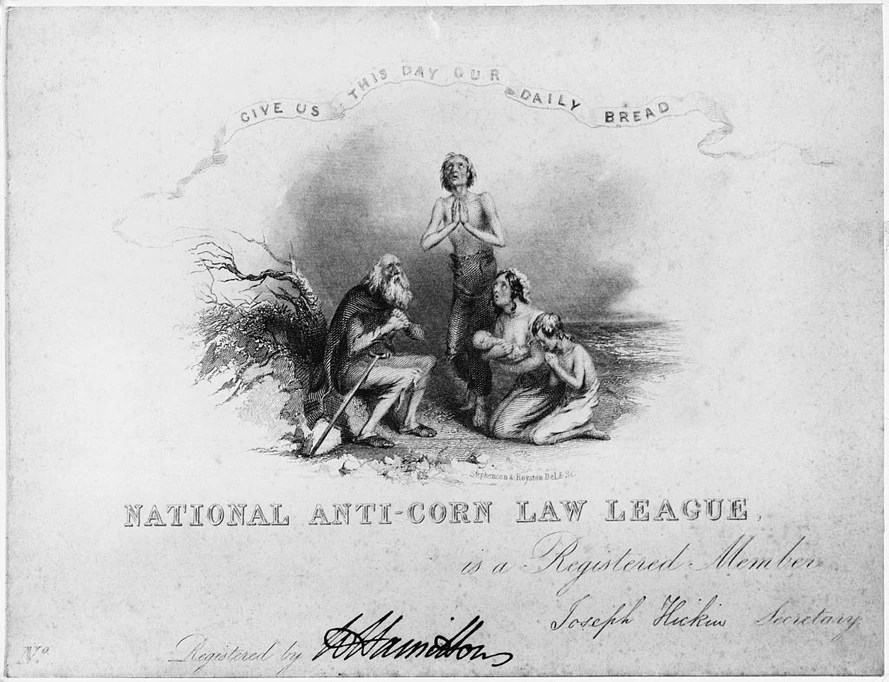
That was a truly incredible sum of money to put across at a time when the economy was already in dire straits due to the cost of war with Napoleon, a disastrous harvest in 1816, mass unemployment and dire food shortages created by the protectionist ‘corn laws’. This disastrous legislation artificially raised the price of imported grain to protect the profits of British farmers. The starvation it caused among the general population was widespread and far-reaching.
This is the fear that had prompted the Peterloo massacre of 1819 when a peaceful rally of working people gathered in Manchester for an afternoon of Levellers’ speeches about equality and political representation, only to be sabre charged by the Manchester and Salford Yeomanry at the behest of local magistrates. That same fear had led to the infamous ‘6 acts’ which aimed to curtail public and private meetings, demonstrations, rallies, anti-establishment publications and even verbal expressions of opinion. The acts created a host of new crimes, the punishment for most of which was either a lengthy spell of imprisonment or transportation to the Australian colonies.
The unrest this hardship caused among the people had made the government of the day uneasy. They were all too aware of recent events across the channel in France where revolution had brought the most severe reckoning to all who had grown fat whilst their countrymen starved. The lack of grain caused by the divisive corn laws meant that the British poor couldn’t even get a slice of Marie Antoinette’s infamous cake to eat!
The establishment response to gatherings such as Peterloo was vicious. That one rally alone saw the deaths of 18 innocent people with around 450 seriously injured by sabres and hooves., the youngest of whom was just 2 years old. William Fildes was knocked from his mother’s arms and trampled by mounted Yeomanry on their way to attack the meeting. And still the impact of the massacre was the opposite of what the Regency government expected. Spontaneous protests broke out all over England. Yet Peterloo, infamous though it has become, was not the first such gathering of disgruntled working people. It had been the rising tide of unrest at government imposed inequality that had led to the Million churches in the first place.
The £1,000,000 of taxpayers’ money used to build 600 new churches to pacify the people could have been used to alleviate the suffering of starving Brits instead. It was the equivalent of over £12 billion today.
The government could have used it to buy food from abroad. They could have repealed the hated Corn Laws, thus removing a large part of the problem overnight. But they didn’t do either of those things – there was no profit to be had there.
So they spent the money on buildings instead and, despite the massive humanitarian case that could have been made for food purchases I have been unable to find records of a single churchman protesting about this policy of putting bricks before bread. The clergy may like to think of itself as a congregation of shepherds but when the chips are down they don’t seem to take terribly good care of their flock.
Most ‘Million churches’ describe their funding as a celebration of the Allied victory over Napoleon in 1815. But the Waterloo churches weren’t just a celebration – they were a strategy. As the 1818 Act itself states… “lest a godless people might also be a revolutionary people”.
Prince George and his government were terrified that the fervour for Equality, Brotherhood and Liberty that led to the French revolution might take hold here in Britain. The newly industrialised economy had sucked hundreds of thousands of former cottage artesans into the ‘Dark, Satanic mills’ of the towns and cities. And there weren’t enough churches to accommodate them?
According to Hansard, George Tierney, then MP for Appleby delivered the wishes of the Prince to parliament…
“The Prince Regent has commanded us to direct your particular attention to the deficiency, which has so long existed, in the number of places of public worship belonging to the established church, when compared with the increased and increasing population of the country. His Royal Highness most earnestly recommends this important subject to your early consideration;
“…the religious and moral habits of the people are the most sure and firm foundation of national prosperity,”
How could the people be pacified without religion, the panacea that Marx would later describe as the opium of the masses?
Further funds were made available in 1824 as the authorities saw the efficacy of Sunday sermons preaching acceptance and rewards to come in Heaven to their impoverished congregations. It was the pacifying, disabling effect of the Church of England at its best, eventually complete with the now traditional hymn, All things bright and beautiful. They sang…
“The rich man in his castle,
The poor man at his gate,
God made them high or lowly
And ordered their estate.
The more religious the people became, the easier they would be to exploit, to control, to abuse. The chancellor of the exchequer, recorded in Hansard told parliament that…
“the reformation for which he pleaded, was not less important to the security of property and of the civil order of society, than to the higher considerations of religion and morality.”
It’s easy to forget how readily weaponised the Christian church is. A religion that encourages acceptance, that insists this life, the only one we’ve got, is just as dirty rags in comparison to the life to come. A church that advocates obedience to authority and praises poverty whilst amassing wealth for itself from the donations of the very people it tells to be poor. A faith that actively maintains inequality and exploitation by discouraging the people from opposing the exploitation they experience.
Never forget the hypocrisy of a church that preaches poverty but amasses money to fill its own coffers.
Never underestimate the power of a pastor who promises posthumous reward to you and lives the high life here on earth himself.
Never fall for the con artist in the pulpit who tells you to accept your lot whilst those who would be your betters grow even fatter at your expense.
And remember that, no matter how inoffensive the local vicar seems now – his ilk were a very different breed before secular society took away their power to burn, to condemn, to monopolise the written word and to blackmail the population with threats of eternal damnation.
From the atheist perspective there are only two types of clergy . The gullible and the deceitful. They have other qualities, of course. Many are gifted speakers and administrators and many are genuinely compassionate. But still, by definition, they cannot fail to fall into one of those two categories.
Gullible or deceitful. Or both.
Neither type is fit to lead in the real world where bread trumps bricks and where the hunger and poverty of the people will always be more important than stuffing the pastor’s own wallet.








 The God free guide